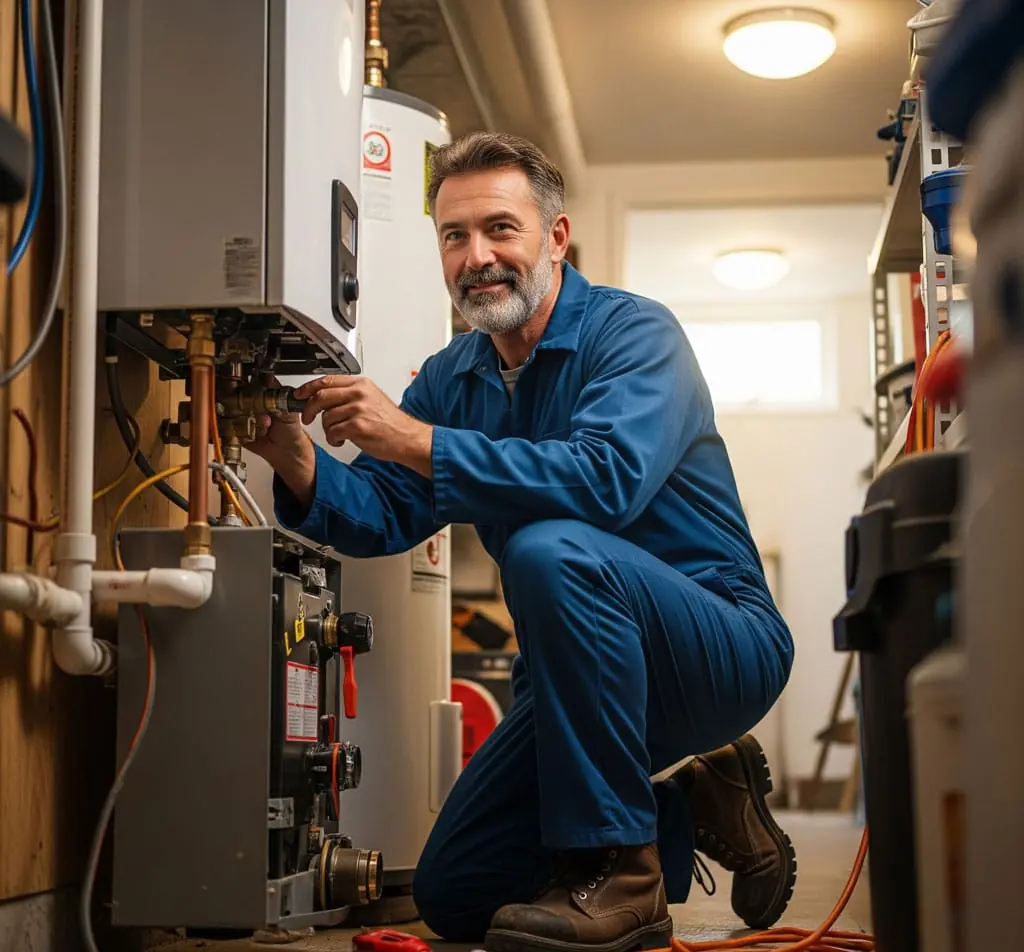
Tankless water heaters provide hot water on demand without storing it in a large tank. They offer energy efficiency and space-saving benefits but come with higher installation costs and limits on how much water you can use at once. If your home’s system struggles to keep up with the last person in line for a shower, a tankless water heater in Phoenix may be worth considering.
At ASAP Plumbing, we’ve been helping Valley homeowners make informed plumbing decisions since 2014. In this guide, we’ll break down tankless water heater costs, pros and cons, and everything you need to know before making the switch.
If you’re considering switching systems, ASAP Plumbing can help you evaluate your options for a tankless water heater in Phoenix, including installation requirements and ongoing maintenance.
Are Tankless Water Heaters Worth It in Phoenix?
A tankless water heater may be worth the investment if you want to save space and reduce standby energy use, especially if you plan to stay in your home long enough to benefit from its potential savings and longer lifespan. If upfront cost is your priority, a traditional tank may be the better fit.
How Do Tankless Water Heaters Work?
Rather than relying on a limited supply of stored hot water, a tankless system heats water as you need it. Here’s what happens from the moment you turn on the hot water:
- Water Enters the Unit: When you turn on a hot-water tap, cold water flows into the tankless system.
- Heating Begins: A flow sensor activates a gas burner or electric heating element, which heats the water as it passes through the unit.
- Hot Water Reaches Your Fixture: Heated water travels to your faucet or shower without drawing from a storage tank.
- Heating Stops: When you turn off the tap, the system stops heating water, reducing the standby energy loss associated with traditional tank heaters.
Although tankless systems heat water on demand, hot water may still take time to reach your faucet or shower depending on the distance from the heater and your home’s plumbing layout.
Tankless vs. Traditional Water Heaters
Both tankless and traditional water heaters provide reliable hot water, but they differ in cost, capacity, and maintenance. Here’s how they compare:
| Feature | Traditional Tank | Tankless |
|---|---|---|
| Upfront Cost | Generally lower | Generally higher |
| Heating Method | Stores and reheats water | Heats water on demand |
| Hot Water Supply | Limited by tank capacity and recovery time | Continuous within rated flow capacity |
| Energy Efficiency | Uses energy to maintain stored water temperature | Reduces standby heat loss |
| Lifespan | Often 10–15 years | Often 20 years or longer with proper care |
| Maintenance | Periodic flushing and inspections | Regular inspections and descaling as needed |
| Installation | Usually simpler to replace | Conversions may require utility upgrades |
| Space | Requires room for a storage tank | Compact, typically wall-mounted |
If upfront cost is your priority, our traditional tank water heaters may be the better fit. Tankless systems offer a compact alternative with continuous hot water within their rated capacity.
Tankless Water Heater Pros and Cons
Pros of Tankless Water Heaters
- Lower Energy Use: Tankless systems reduce standby energy loss by heating water only when needed, which can help lower utility bills.
- Longer Lifespan: With proper care, tankless units often last longer than traditional water heaters.
- Space Savings: Compact, wall-mounted units free up valuable space in your home.
- Continuous Hot Water: Enjoy a steady supply of hot water as long as demand stays within the unit’s capacity.
Cons of Tankless Water Heaters
- Higher Upfront Cost: Equipment and installation typically cost more, especially when switching from a tank.
- Flow Limitations: Running multiple showers or appliances at once can push the system beyond its capacity.
- Installation Requirements: Your home may need upgrades to the gas line, electrical, or venting.
- Hard-Water Maintenance: Phoenix’s mineral-rich water makes regular descaling important to prevent buildup.
What Affects Tankless Water Heater Installation Costs in Phoenix?
Tankless water heater installation typically costs more upfront than replacing a traditional tank. The final price depends on the system you choose and how much work your home needs to support it.
Here’s what affects the cost:
- Equipment: Price varies by fuel type, capacity, and efficiency.
- Installation Labor: Costs depend on removing the old heater and updating plumbing connections.
- Utility Upgrades: Some homes need larger gas lines, electrical upgrades, or new venting.
- Permits: Local permit and inspection requirements may add to the cost.
- Ongoing Maintenance: Budget for periodic descaling to manage mineral buildup from Phoenix’s hard water.
Energy savings may help offset the higher upfront cost over time, depending on your usage and utility rates. At ASAP Plumbing, we’ll explain your installation options and provide an upfront estimate.
How Phoenix’s Hard Water Affects Tankless Water Heaters
According to the City of Phoenix’s 2025 Water Quality Report, local water hardness ranged from 10 to 17.6 grains per gallon. Calcium and magnesium can create mineral buildup inside tankless water heaters, potentially reducing water flow and heating efficiency.
To help protect your system:
- Schedule Descaling: Follow the manufacturer’s maintenance guidelines to remove mineral buildup and keep water flowing properly.
- Consider a Water Softener: Our water softener installation helps reduce the hardness minerals that cause scale.
- Review Your Water Quality: We’ll help you explore water treatment options for your home’s needs. Standard filtration doesn’t necessarily remove the minerals that cause scale.
How to Choose a Tankless Water Heater for Your Phoenix Home
Your home’s existing gas or electrical setup can affect which tankless system makes sense and how much installation will cost. Here’s how the two options compare:
| Feature | Gas Tankless | Electric Tankless |
|---|---|---|
| Hot-Water Output | Often supports higher household demand | Output varies; whole-home models may need substantial electrical capacity |
| Installation | May require gas-line and venting changes | No combustion venting, but may need electrical upgrades |
| Operating Costs | Depend on gas rates and efficiency | Depend on electricity rates and efficiency |
| Best Fit | Homes with suitable gas service and higher demand | Homes with adequate electrical capacity and compatible hot-water needs |
Beyond comparing APS, SRP, or gas rates, you’ll need a tankless system sized for your household’s hot-water demand. Capacity depends on simultaneous water use (measured in gallons per minute, GPM) and the required temperature rise. For example, two showers using 2 GPM each need about 4 GPM at that temperature rise.
What Does Switching From a Tank to a Tankless Water Heater Involve?
Converting to tankless takes some planning, especially if your home was originally set up for a storage-tank heater. Before making the switch, here’s what to expect:
- Assessing Your Home: We’ll check your hot-water demand, utility connections, and available space for installation.
- Choosing Equipment: We’ll recommend a compatible unit and explain any necessary upgrades before installation.
- Installing the System: The work may include removing your old tank, updating connections, mounting the new unit, and testing its operation.
- Checking Contractor Credentials: Tankless conversions can involve gas, electrical, and plumbing safety requirements. Verify applicable licensing through the Arizona Registrar of Contractors.
- Planning for Future Service: Ask about manufacturer warranties, replacement parts, and ongoing maintenance support.
Ready to make the switch? At ASAP Plumbing, we’ll assess your home’s setup, explain any necessary upgrades, and provide an upfront estimate. Contact us today to see if a tankless water heater in Phoenix is the right investment for your home.
Frequently Asked Questions About Tankless Water Heaters in Phoenix
What are the best tankless water heater brands for Phoenix homes?
The best brand depends on your hot-water needs, budget, and available service support. ASAP Plumbing services brands including Rheem, Navien, Bosch, Noritz, and Rinnai. We’ll help you compare models that fit your home’s needs and budget.
What affects the cost of an Electric Tankless Water Heater?
Electric tankless installation costs depend on the unit’s capacity and your home’s electrical service. Some homes need panel or circuit upgrades, so we’ll assess your setup before providing an estimate.
Are electric tankless water heaters cheaper than gas models?
Electric models sometimes cost less upfront, but electrical upgrades can change that. Compare total installation costs and utility rates rather than equipment prices alone.
How long do tankless water heaters last in Arizona?
Many tankless water heaters can last 20 years or longer with proper care, although actual lifespan varies by model and usage. In Phoenix, staying on top of mineral buildup and following the manufacturer’s maintenance recommendations are especially important.
Should I choose a tankless or hybrid water heater in Phoenix?
Tankless systems heat water on demand, while hybrid heat-pump models use surrounding air to heat stored water. Understanding how tankless compares to hybrid water heaters can help you choose based on your home’s space, hot-water needs, and energy costs.
Do tankless water heaters need regular maintenance in Phoenix?
Yes. Phoenix’s hard water can cause mineral buildup that affects heating performance. Periodic inspections and descaling help manage that buildup, but the right service schedule depends on your water quality, equipment, and manufacturer’s recommendations.